•  
China return for Ueno zoo pandas

China return for Ueno zoo pandas

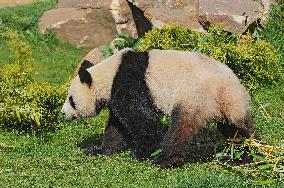
People watch a truck carrying male giant panda Xiao Xiao and his twin sister Lei Lei leave Ueno Zoological Gardens in Tokyo on Jan. 27, 2026, before the animals are sent to China, marking the first time that Japan will be without pandas since the first ones arrived in the country in 1972.

  •  
China return for Ueno zoo pandas

China return for Ueno zoo pandas

A truck carrying male giant panda Xiao Xiao and his twin sister Lei Lei leaves Ueno Zoological Gardens in Tokyo on Jan. 27, 2026, before the animals are sent to China, marking the first time that Japan will be without pandas since the first ones arrived in the country in 1972.

  •  
China return for Ueno zoo pandas

China return for Ueno zoo pandas

People watch a truck carrying male giant panda Xiao Xiao and his twin sister Lei Lei leave Ueno Zoological Gardens in Tokyo on Jan. 27, 2026, before the animals are sent to China, marking the first time that Japan will be without pandas since the first ones arrived in the country in 1972.

  •  
China return for Ueno zoo pandas

China return for Ueno zoo pandas

A truck carrying male giant panda Xiao Xiao and his twin sister Lei Lei leaves Ueno Zoological Gardens in Tokyo on Jan. 27, 2026, before the animals are sent to China, marking the first time that Japan will be without pandas since the first ones arrived in the country in 1972.

  •  
Tibetan Antelopes at Changtang National Nature Reserve - China

Tibetan Antelopes at Changtang National Nature Reserve - China

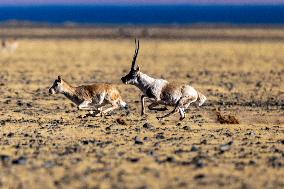
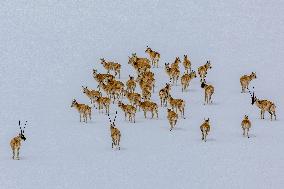
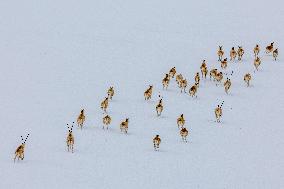
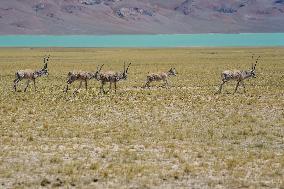
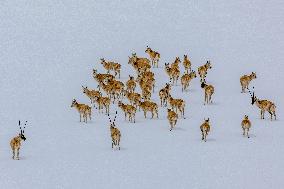
A male Tibetan antelope chases a female one at the Changtang National Nature Reserve in southwest China's Xizang Autonomous Region, December 3, 2025. Winter is the mating season for Tibetan antelopes, which enjoy first-class state protection in China, and are mostly found in the Xizang Autonomous Region, Qinghai Province and the Xinjiang Uygur Autonomous Region. Photo by Xinhua/Jiang Fan/ABACAPRESS.COM

  •  
Tibetan Antelopes at Changtang National Nature Reserve - China

Tibetan Antelopes at Changtang National Nature Reserve - China

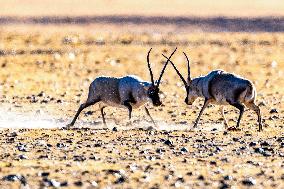
Two male Tibetan antelopes fight for mating at the Changtang National Nature Reserve in southwest China's Xizang Autonomous Region, December 3, 2025. Winter is the mating season for Tibetan antelopes, which enjoy first-class state protection in China, and are mostly found in the Xizang Autonomous Region, Qinghai Province and the Xinjiang Uygur Autonomous Region. Photo by Xinhua/Jiang Fan/ABACAPRESS.COM

  •  
Tibetan Antelopes at Changtang National Nature Reserve - China

Tibetan Antelopes at Changtang National Nature Reserve - China

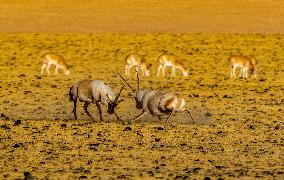
Two male Tibetan antelopes fight for mating at the Changtang National Nature Reserve in southwest China's Xizang Autonomous Region, December 3, 2025. Winter is the mating season for Tibetan antelopes, which enjoy first-class state protection in China, and are mostly found in the Xizang Autonomous Region, Qinghai Province and the Xinjiang Uygur Autonomous Region. Photo by Xinhua/Jiang Fan/ABACAPRESS.COM

  •  
Tibetan Antelopes at Changtang National Nature Reserve - China

Tibetan Antelopes at Changtang National Nature Reserve - China

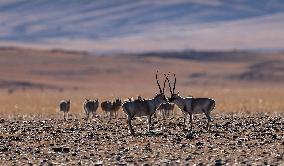
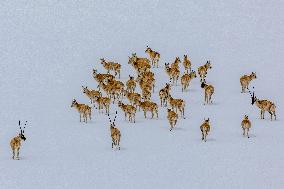
Two male Tibetan antelopes confront before a fight at the Changtang National Nature Reserve in southwest China's Xizang Autonomous Region, December 4, 2025. Winter is the mating season for Tibetan antelopes, which enjoy first-class state protection in China, and are mostly found in the Xizang Autonomous Region, Qinghai Province and the Xinjiang Uygur Autonomous Region. Photo by Xinhua/Jiang Fan/ABACAPRESS.COM

  •  
Tibetan Antelopes at Changtang National Nature Reserve - China

Tibetan Antelopes at Changtang National Nature Reserve - China

Two male Tibetan antelopes confront before a fight at the Changtang National Nature Reserve in southwest China's Xizang Autonomous Region, December 1, 2025. Winter is the mating season for Tibetan antelopes, which enjoy first-class state protection in China, and are mostly found in the Xizang Autonomous Region, Qinghai Province and the Xinjiang Uygur Autonomous Region. Photo by Xinhua/Guo Yu/ABACAPRESS.COM

  •  
Famous Pair Of Pandas Will Leave Beauval Zoo For China - France

Famous Pair Of Pandas Will Leave Beauval Zoo For China - France

File photo - Le repas des Pandas : Astrid soigneur dans son bureau En 2012 un evenement exceptionnel se produit au ZooParc de Beauval (Loire et Cher) For the first time in France, a pair of pandas is being presented to the public: Huan Huan, the female, and Yuan Zi, the male. The giant panda is listed as “endangered” on the IUCN (International Union for Conservation of Nature) Red List of Threatened Species. It is estimated that there are 1,600 pandas still living in the wild. The famous pair of pandas will leave Beauval Zoo on Tuesday, November 25, 2025, due to an early return to China caused by the female's kidney failure, on November 24, 2025, in Saint-Aignan, France. Photo by Pascal Baril/ABACAPRESS.COM

  •  
Famous Pair Of Pandas Will Leave Beauval Zoo For China - France

Famous Pair Of Pandas Will Leave Beauval Zoo For China - France

File photo - In the nursery, everything is ready to welcome a baby panda. Here is the incubator with a panda soft toy inside, on April 11, 2012, at the Beauval Zoo. For the first time in France, a pair of pandas is being presented to the public: Huan Huan, the female, and Yuan Zi, the male. The giant panda is listed as “endangered” on the IUCN (International Union for Conservation of Nature) Red List of Threatened Species. It is estimated that there are 1,600 pandas still living in the wild. The famous pair of pandas will leave Beauval Zoo on Tuesday, November 25, 2025, due to an early return to China caused by the female's kidney failure, on November 24, 2025, in Saint-Aignan, France. Photo by Pascal Baril/ABACAPRESS.COM

  •  
Famous Pair Of Pandas Will Leave Beauval Zoo For China - France

Famous Pair Of Pandas Will Leave Beauval Zoo For China - France

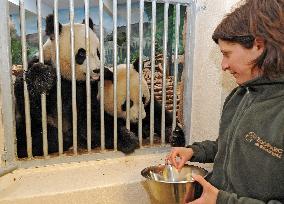
File photo - Feeding time for the pandas: Astrid, a keeper, gives the pandas their supplements, on April 11, 2012, at the Beauval Zoo. For the first time in France, a pair of pandas is being presented to the public: Huan Huan, the female, and Yuan Zi, the male. The giant panda is listed as “endangered” on the IUCN (International Union for Conservation of Nature) Red List of Threatened Species. It is estimated that there are 1,600 pandas still living in the wild. The famous pair of pandas will leave Beauval Zoo on Tuesday, November 25, 2025, due to an early return to China caused by the female's kidney failure, on November 24, 2025, in Saint-Aignan, France. Photo by Pascal Baril/ABACAPRESS.COM

  •  
Famous Pair Of Pandas Will Leave Beauval Zoo For China - France

Famous Pair Of Pandas Will Leave Beauval Zoo For China - France

File photo - Astrid, a keeper, prepares food supplements for the pandas, including pellets and apples, on April 11, 2012, at the Beauval Zoo. For the first time in France, a pair of pandas is being presented to the public: Huan Huan, the female, and Yuan Zi, the male. The giant panda is listed as “endangered” on the IUCN (International Union for Conservation of Nature) Red List of Threatened Species. It is estimated that there are 1,600 pandas still living in the wild. The famous pair of pandas will leave Beauval Zoo on Tuesday, November 25, 2025, due to an early return to China caused by the female's kidney failure, on November 24, 2025, in Saint-Aignan, France. Photo by Pascal Baril/ABACAPRESS.COM

  •  
Famous Pair Of Pandas Will Leave Beauval Zoo For China - France

Famous Pair Of Pandas Will Leave Beauval Zoo For China - France

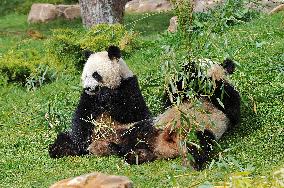
File photo - The Pandas' Meal on April 11, 2012, an exceptional event took place at Beauval Zoo (Loire-et-Cher). For the first time in France, a pair of pandas is being presented to the public: Huan Huan, the female, and Yuan Zi, the male. The giant panda is listed as “endangered” on the IUCN (International Union for Conservation of Nature) Red List of Threatened Species. It is estimated that there are 1,600 pandas still living in the wild. The famous pair of pandas will leave Beauval Zoo on Tuesday, November 25, 2025, due to an early return to China caused by the female's kidney failure, on November 24, 2025, in Saint-Aignan, France. Photo by Pascal Baril/ABACAPRESS.COM

  •  
Famous Pair Of Pandas Will Leave Beauval Zoo For China - France

Famous Pair Of Pandas Will Leave Beauval Zoo For China - France

File photo - The Pandas' Meal on April 11, 2012, an exceptional event took place at Beauval Zoo (Loire-et-Cher). For the first time in France, a pair of pandas is being presented to the public: Huan Huan, the female, and Yuan Zi, the male. The giant panda is listed as “endangered” on the IUCN (International Union for Conservation of Nature) Red List of Threatened Species. It is estimated that there are 1,600 pandas still living in the wild. The famous pair of pandas will leave Beauval Zoo on Tuesday, November 25, 2025, due to an early return to China caused by the female's kidney failure, on November 24, 2025, in Saint-Aignan, France. Photo by Pascal Baril/ABACAPRESS.COM

  •  
Famous Pair Of Pandas Will Leave Beauval Zoo For China - France

Famous Pair Of Pandas Will Leave Beauval Zoo For China - France

File photo - The Pandas' Meal on April 11, 2012, an exceptional event took place at Beauval Zoo (Loire-et-Cher). For the first time in France, a pair of pandas is being presented to the public: Huan Huan, the female, and Yuan Zi, the male. The giant panda is listed as “endangered” on the IUCN (International Union for Conservation of Nature) Red List of Threatened Species. It is estimated that there are 1,600 pandas still living in the wild. The famous pair of pandas will leave Beauval Zoo on Tuesday, November 25, 2025, due to an early return to China caused by the female's kidney failure, on November 24, 2025, in Saint-Aignan, France. Photo by Pascal Baril/ABACAPRESS.COM

  •  
Famous Pair Of Pandas Will Leave Beauval Zoo For China - France

Famous Pair Of Pandas Will Leave Beauval Zoo For China - France

File photo - Feeding time for the pandas: Astrid, a keeper, gives the pandas their supplements, on April 11, 2012, at the Beauval Zoo. For the first time in France, a pair of pandas is being presented to the public: Huan Huan, the female, and Yuan Zi, the male. The giant panda is listed as “endangered” on the IUCN (International Union for Conservation of Nature) Red List of Threatened Species. It is estimated that there are 1,600 pandas still living in the wild. The famous pair of pandas will leave Beauval Zoo on Tuesday, November 25, 2025, due to an early return to China caused by the female's kidney failure, on November 24, 2025, in Saint-Aignan, France. Photo by Pascal Baril/ABACAPRESS.COM

  •  
Famous Pair Of Pandas Will Leave Beauval Zoo For China - France

Famous Pair Of Pandas Will Leave Beauval Zoo For China - France

File photo - The Pandas' Meal on April 11, 2012, an exceptional event took place at Beauval Zoo (Loire-et-Cher). For the first time in France, a pair of pandas is being presented to the public: Huan Huan, the female, and Yuan Zi, the male. The giant panda is listed as “endangered” on the IUCN (International Union for Conservation of Nature) Red List of Threatened Species. It is estimated that there are 1,600 pandas still living in the wild. The famous pair of pandas will leave Beauval Zoo on Tuesday, November 25, 2025, due to an early return to China caused by the female's kidney failure, on November 24, 2025, in Saint-Aignan, France. Photo by Pascal Baril/ABACAPRESS.COM

  •  
Famous Pair Of Pandas Will Leave Beauval Zoo For China - France

Famous Pair Of Pandas Will Leave Beauval Zoo For China - France

File photo - Feeding time for the pandas: Astrid, keeper, and Claudine, our journalist, bring bamboo to the pandas, on April 11, 2012, at the Beauval Zoo. For the first time in France, a pair of pandas is being presented to the public: Huan Huan, the female, and Yuan Zi, the male. The giant panda is listed as “endangered” on the IUCN (International Union for Conservation of Nature) Red List of Threatened Species. It is estimated that there are 1,600 pandas still living in the wild. The famous pair of pandas will leave Beauval Zoo on Tuesday, November 25, 2025, due to an early return to China caused by the female's kidney failure, on November 24, 2025, in Saint-Aignan, France. Photo by Pascal Baril/ABACAPRESS.COM

  •  
Famous Pair Of Pandas Will Leave Beauval Zoo For China - France

Famous Pair Of Pandas Will Leave Beauval Zoo For China - France

File photo - The Pandas' Meal on April 11, 2012, an exceptional event took place at Beauval Zoo (Loire-et-Cher). For the first time in France, a pair of pandas is being presented to the public: Huan Huan, the female, and Yuan Zi, the male. The giant panda is listed as “endangered” on the IUCN (International Union for Conservation of Nature) Red List of Threatened Species. It is estimated that there are 1,600 pandas still living in the wild. The famous pair of pandas will leave Beauval Zoo on Tuesday, November 25, 2025, due to an early return to China caused by the female's kidney failure, on November 24, 2025, in Saint-Aignan, France. Photo by Pascal Baril/ABACAPRESS.COM

  •  
Famous Pair Of Pandas Will Leave Beauval Zoo For China - France

Famous Pair Of Pandas Will Leave Beauval Zoo For China - France

File photo - The Pandas' Meal on April 11, 2012, an exceptional event took place at Beauval Zoo (Loire-et-Cher). For the first time in France, a pair of pandas is being presented to the public: Huan Huan, the female, and Yuan Zi, the male. The giant panda is listed as “endangered” on the IUCN (International Union for Conservation of Nature) Red List of Threatened Species. It is estimated that there are 1,600 pandas still living in the wild. The famous pair of pandas will leave Beauval Zoo on Tuesday, November 25, 2025, due to an early return to China caused by the female's kidney failure, on November 24, 2025, in Saint-Aignan, France. Photo by Pascal Baril/ABACAPRESS.COM

  •  
Famous Pair Of Pandas Will Leave Beauval Zoo For China - France

Famous Pair Of Pandas Will Leave Beauval Zoo For China - France

File photo - The Pandas' Meal on April 11, 2012, an exceptional event took place at Beauval Zoo (Loire-et-Cher). For the first time in France, a pair of pandas is being presented to the public: Huan Huan, the female, and Yuan Zi, the male. The giant panda is listed as “endangered” on the IUCN (International Union for Conservation of Nature) Red List of Threatened Species. It is estimated that there are 1,600 pandas still living in the wild. The famous pair of pandas will leave Beauval Zoo on Tuesday, November 25, 2025, due to an early return to China caused by the female's kidney failure, on November 24, 2025, in Saint-Aignan, France. Photo by Pascal Baril/ABACAPRESS.COM

  •  
Famous Pair Of Pandas Will Leave Beauval Zoo For China - France

Famous Pair Of Pandas Will Leave Beauval Zoo For China - France

File photo - The Pandas' Meal on April 11, 2012, an exceptional event took place at Beauval Zoo (Loire-et-Cher). For the first time in France, a pair of pandas is being presented to the public: Huan Huan, the female, and Yuan Zi, the male. The giant panda is listed as “endangered” on the IUCN (International Union for Conservation of Nature) Red List of Threatened Species. It is estimated that there are 1,600 pandas still living in the wild. The famous pair of pandas will leave Beauval Zoo on Tuesday, November 25, 2025, due to an early return to China caused by the female's kidney failure, on November 24, 2025, in Saint-Aignan, France. Photo by Pascal Baril/ABACAPRESS.COM

  •  
Famous Pair Of Pandas Will Leave Beauval Zoo For China - France

Famous Pair Of Pandas Will Leave Beauval Zoo For China - France

File photo - The Pandas' Meal on April 11, 2012, an exceptional event took place at Beauval Zoo (Loire-et-Cher). For the first time in France, a pair of pandas is being presented to the public: Huan Huan, the female, and Yuan Zi, the male. The giant panda is listed as “endangered” on the IUCN (International Union for Conservation of Nature) Red List of Threatened Species. It is estimated that there are 1,600 pandas still living in the wild. The famous pair of pandas will leave Beauval Zoo on Tuesday, November 25, 2025, due to an early return to China caused by the female's kidney failure, on November 24, 2025, in Saint-Aignan, France. Photo by Pascal Baril/ABACAPRESS.COM

  •  
Deers At Jiangsu National Nature Reserve - China

Deers At Jiangsu National Nature Reserve - China

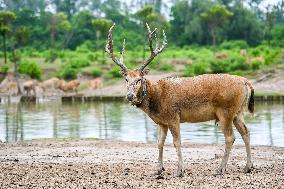
A male milu deer is seen at the Dafeng Milu National Nature Reserve in east China's Jiangsu Province, on June 7, 2025. Xue Dandan, 35, is the head of the security department of Dafeng Milu National Nature Reserve in Jiangsu. After graduating in 2016, she devoted herself to patrol management and public science education of milu deer in the reserve. When she first arrived, she knew little about the species. Over the past nine years, Xue has immersed herself in relevant materials, consulted experts and scholars, and conducted regular field patrols with colleagues. While constantly enriching her knowledge on the species, she has also translated professional knowledge of milu deer protection into accessible information for the public. Through daily work, Xue has developed a deep bond with milu deer. She helped villagers rescue a milu deer trapped by nets, and also participated in building an intelligent platform, which monitors the biodiversity of milu deer habitats. "The reserve is like my home and the milu deer

  •  
Deers At Jiangsu National Nature Reserve - China

Deers At Jiangsu National Nature Reserve - China

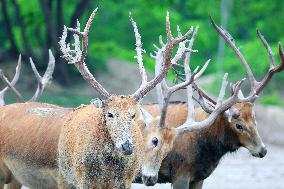
Male milu deer are seen at the Dafeng Milu National Nature Reserve in east China's Jiangsu Province, on June 7, 2025. Xue Dandan, 35, is the head of the security department of Dafeng Milu National Nature Reserve in Jiangsu. After graduating in 2016, she devoted herself to patrol management and public science education of milu deer in the reserve. When she first arrived, she knew little about the species. Over the past nine years, Xue has immersed herself in relevant materials, consulted experts and scholars, and conducted regular field patrols with colleagues. While constantly enriching her knowledge on the species, she has also translated professional knowledge of milu deer protection into accessible information for the public. Through daily work, Xue has developed a deep bond with milu deer. She helped villagers rescue a milu deer trapped by nets, and also participated in building an intelligent platform, which monitors the biodiversity of milu deer habitats. "The reserve is like my home and the milu deer a

  •  
U.S.-SAN DIEGO-ZOO-CHINA-PANDAS-FIRST-LOOK PHOTOS

U.S.-SAN DIEGO-ZOO-CHINA-PANDAS-FIRST-LOOK PHOTOS

(240709) -- SAN DIEGO (U.S.), July 9, 2024 Photo by Xinhua/ABACAPRESS.COM) -- A first-look photo released by San Diego Zoo Wildlife Alliance on July 9, 2024 shows Yun Chuan, an almost five-year-old male panda, at his new home at the San Diego Zoo in San Diego, California, the United States. San Diego Zoo Wildlife Alliance on Tuesday shared first-look photos of the highly anticipated panda pair, Yun Chuan and Xin Bao, as they continue settling into their new home here following their arrival in the United States last month. (San Diego Zoo Wildlife Alliance/Handout via Xinhua/ABACAPRESS.COM

  •  
Tibetan Antelopes Migration - China

Tibetan Antelopes Migration - China

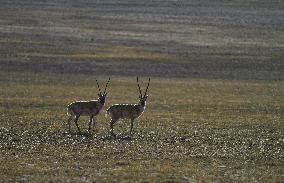
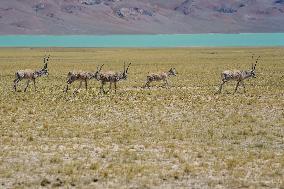
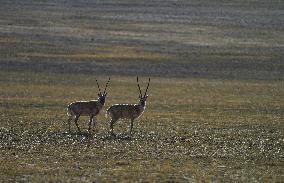
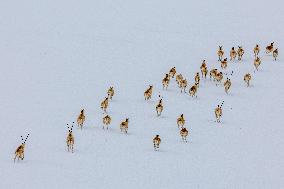
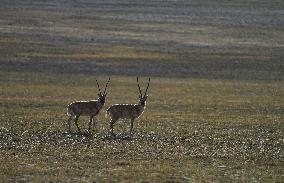
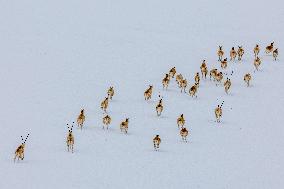
Male Tibetan antelopes guard the female ones during their migration to their birth-giving ground in Qiangtang National Nature Reserve in southwest China's Xizang Autonomous Region, June 13, 2024. Tens of thousands of pregnant Tibetan antelopes start their migration around May every year for birth-giving and would return with their calves in late July. Their natural enemies including wolves and bears are always there to ambush them. Under first-class state protection in China, the once-endangered Tibetan antelope is mostly found in the Xizang Autonomous Region, Qinghai Province, and the Xinjiang Uygur Autonomous Region. Their population has increased over the past three decades thanks to a ban on illegal hunting and measures implemented to improve their habitat. Photo by Xinhua/Jigme Dorje/ABACAPRESS.COM

  •  
Tibetan Antelopes Migration - China

Tibetan Antelopes Migration - China

Male Tibetan antelopes guard the female ones during their migration to their birth-giving ground in Qiangtang National Nature Reserve in southwest China's Xizang Autonomous Region, May 8, 2024. Tens of thousands of pregnant Tibetan antelopes start their migration around May every year for birth-giving and would return with their calves in late July. Their natural enemies including wolves and bears are always there to ambush them. Under first-class state protection in China, the once-endangered Tibetan antelope is mostly found in the Xizang Autonomous Region, Qinghai Province, and the Xinjiang Uygur Autonomous Region. Their population has increased over the past three decades thanks to a ban on illegal hunting and measures implemented to improve their habitat. Photo by Xinhua/Jiang Fan/ABACAPRESS.COM

  •  
Tibetan Antelopes Migration - China

Tibetan Antelopes Migration - China

Male Tibetan antelopes guard the femle ones during their migration to their birth-giving ground in Qiangtang National Nature Reserve in southwest China's Xizang Autonomous Region, May 8, 2024. Tens of thousands of pregnant Tibetan antelopes start their migration around May every year for birth-giving and would return with their calves in late July. Their natural enemies including wolves and bears are always there to ambush them. Under first-class state protection in China, the once-endangered Tibetan antelope is mostly found in the Xizang Autonomous Region, Qinghai Province, and the Xinjiang Uygur Autonomous Region. Their population has increased over the past three decades thanks to a ban on illegal hunting and measures implemented to improve their habitat. Photo by Xinhua/Jiang Fan/ABACAPRESS.COM

  •  
(InXizang)CHINA-XIZANG-TIBETAN ANTELOPES-MIGRATION (CN)

(InXizang)CHINA-XIZANG-TIBETAN ANTELOPES-MIGRATION (CN)

(240620) -- NAGQU, June 20, 2024 Photo by Xinhua/ABACAPRESS.COM) -- Male Tibetan antelopes guard the femle ones during their migration to their birth-giving ground in Qiangtang National Nature Reserve in southwest China's Xizang Autonomous Region, June 12, 2024. Tens of thousands of pregnant Tibetan antelopes start their migration around May every year for birth-giving and would return with their calves in late July. Their natural enemies including wolves and bears are always there to ambush them. Under first-class state protection in China, the once-endangered Tibetan antelope is mostly found in the Xizang Autonomous Region, Qinghai Province, and the Xinjiang Uygur Autonomous Region. Their population has increased over the past three decades thanks to a ban on illegal hunting and measures implemented to improve their habitat. Photo by Xinhua/ABACAPRESS.COM/Tenzing Nima Qadhup)

  •  
(InXizang)CHINA-XIZANG-TIBETAN ANTELOPES-MIGRATION (CN)

(InXizang)CHINA-XIZANG-TIBETAN ANTELOPES-MIGRATION (CN)

(240620) -- NAGQU, June 20, 2024 Photo by Xinhua/ABACAPRESS.COM) -- Male Tibetan antelopes guard the female ones during their migration to their birth-giving ground in Qiangtang National Nature Reserve in southwest China's Xizang Autonomous Region, May 8, 2024. Tens of thousands of pregnant Tibetan antelopes start their migration around May every year for birth-giving and would return with their calves in late July. Their natural enemies including wolves and bears are always there to ambush them. Under first-class state protection in China, the once-endangered Tibetan antelope is mostly found in the Xizang Autonomous Region, Qinghai Province, and the Xinjiang Uygur Autonomous Region. Their population has increased over the past three decades thanks to a ban on illegal hunting and measures implemented to improve their habitat. Photo by Xinhua/ABACAPRESS.COM/Jiang Fan)

  •  
(InXizang)CHINA-XIZANG-TIBETAN ANTELOPES-MIGRATION (CN)

(InXizang)CHINA-XIZANG-TIBETAN ANTELOPES-MIGRATION (CN)

(240620) -- NAGQU, June 20, 2024 Photo by Xinhua/ABACAPRESS.COM) -- Male Tibetan antelopes guard the female ones during their migration to their birth-giving ground in Qiangtang National Nature Reserve in southwest China's Xizang Autonomous Region, June 13, 2024. Tens of thousands of pregnant Tibetan antelopes start their migration around May every year for birth-giving and would return with their calves in late July. Their natural enemies including wolves and bears are always there to ambush them. Under first-class state protection in China, the once-endangered Tibetan antelope is mostly found in the Xizang Autonomous Region, Qinghai Province, and the Xinjiang Uygur Autonomous Region. Their population has increased over the past three decades thanks to a ban on illegal hunting and measures implemented to improve their habitat. Photo by Xinhua/ABACAPRESS.COM/Jigme Dorje)

  •  
(InXizang)CHINA-XIZANG-TIBETAN ANTELOPES-MIGRATION (CN)

(InXizang)CHINA-XIZANG-TIBETAN ANTELOPES-MIGRATION (CN)

(240620) -- NAGQU, June 20, 2024 Photo by Xinhua/ABACAPRESS.COM) -- Male Tibetan antelopes guard the femle ones during their migration to their birth-giving ground in Qiangtang National Nature Reserve in southwest China's Xizang Autonomous Region, May 8, 2024. Tens of thousands of pregnant Tibetan antelopes start their migration around May every year for birth-giving and would return with their calves in late July. Their natural enemies including wolves and bears are always there to ambush them. Under first-class state protection in China, the once-endangered Tibetan antelope is mostly found in the Xizang Autonomous Region, Qinghai Province, and the Xinjiang Uygur Autonomous Region. Their population has increased over the past three decades thanks to a ban on illegal hunting and measures implemented to improve their habitat. Photo by Xinhua/ABACAPRESS.COM/Jiang Fan)

  •  
(InXizang)CHINA-XIZANG-TIBETAN ANTELOPES-MIGRATION (CN)

(InXizang)CHINA-XIZANG-TIBETAN ANTELOPES-MIGRATION (CN)

(240620) -- NAGQU, June 20, 2024 (Xinhua) -- Male Tibetan antelopes guard the female ones during their migration to their birth-giving ground in Qiangtang National Nature Reserve in southwest China's Xizang Autonomous Region, June 13, 2024. Tens of thousands of pregnant Tibetan antelopes start their migration around May every year for birth-giving and would return with their calves in late July. Their natural enemies including wolves and bears are always there to ambush them. Under first-class state protection in China, the once-endangered Tibetan antelope is mostly found in the Xizang Autonomous Region, Qinghai Province, and the Xinjiang Uygur Autonomous Region. Their population has increased over the past three decades thanks to a ban on illegal hunting and measures implemented to improve their habitat. (Xinhua/Jigme Dorje)

  •  
(InXizang)CHINA-XIZANG-TIBETAN ANTELOPES-MIGRATION (CN)

(InXizang)CHINA-XIZANG-TIBETAN ANTELOPES-MIGRATION (CN)

(240620) -- NAGQU, June 20, 2024 (Xinhua) -- Male Tibetan antelopes guard the femle ones during their migration to their birth-giving ground in Qiangtang National Nature Reserve in southwest China's Xizang Autonomous Region, May 8, 2024. Tens of thousands of pregnant Tibetan antelopes start their migration around May every year for birth-giving and would return with their calves in late July. Their natural enemies including wolves and bears are always there to ambush them. Under first-class state protection in China, the once-endangered Tibetan antelope is mostly found in the Xizang Autonomous Region, Qinghai Province, and the Xinjiang Uygur Autonomous Region. Their population has increased over the past three decades thanks to a ban on illegal hunting and measures implemented to improve their habitat. (Xinhua/Jiang Fan)

  •  
(InXizang)CHINA-XIZANG-TIBETAN ANTELOPES-MIGRATION (CN)

(InXizang)CHINA-XIZANG-TIBETAN ANTELOPES-MIGRATION (CN)

(240620) -- NAGQU, June 20, 2024 (Xinhua) -- Male Tibetan antelopes guard the female ones during their migration to their birth-giving ground in Qiangtang National Nature Reserve in southwest China's Xizang Autonomous Region, May 8, 2024. Tens of thousands of pregnant Tibetan antelopes start their migration around May every year for birth-giving and would return with their calves in late July. Their natural enemies including wolves and bears are always there to ambush them. Under first-class state protection in China, the once-endangered Tibetan antelope is mostly found in the Xizang Autonomous Region, Qinghai Province, and the Xinjiang Uygur Autonomous Region. Their population has increased over the past three decades thanks to a ban on illegal hunting and measures implemented to improve their habitat. (Xinhua/Jiang Fan)

  •  
(InXizang)CHINA-XIZANG-TIBETAN ANTELOPES-MIGRATION (CN)

(InXizang)CHINA-XIZANG-TIBETAN ANTELOPES-MIGRATION (CN)

(240620) -- NAGQU, June 20, 2024 (Xinhua) -- Male Tibetan antelopes guard the femle ones during their migration to their birth-giving ground in Qiangtang National Nature Reserve in southwest China's Xizang Autonomous Region, June 12, 2024. Tens of thousands of pregnant Tibetan antelopes start their migration around May every year for birth-giving and would return with their calves in late July. Their natural enemies including wolves and bears are always there to ambush them. Under first-class state protection in China, the once-endangered Tibetan antelope is mostly found in the Xizang Autonomous Region, Qinghai Province, and the Xinjiang Uygur Autonomous Region. Their population has increased over the past three decades thanks to a ban on illegal hunting and measures implemented to improve their habitat. (Xinhua/Tenzing Nima Qadhup)

  •  
SOUTH KOREA-CHANGNYEOUNG COUNTY-CRESTED IBIS

SOUTH KOREA-CHANGNYEOUNG COUNTY-CRESTED IBIS

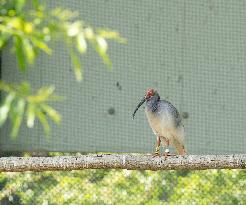
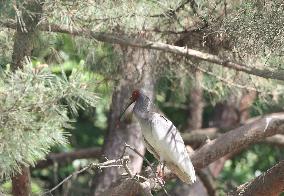
(240524) -- SEOUL, May 24, 2024 (Xinhua) -- A crested ibis is pictured at the Upo Crested Ibis Restoration Center in Changnyeong, South Korea, May 20, 2024. The crested ibis, which used to be widely distributed in China, Japan, South Korea and other East Asian regions, has become an endangered bird species worldwide, rarely seen in South Korea since the 1980s. In 2008, the crested ibis couple "Yang Zhou" and "Long Ting" arrived and settled down at the Upo Crested Ibis Restoration Center in Changnyeong as a gift from China to South Korea. Another two male crested ibises "Jin Shui" and "Bai Shi" were sent to South Korea in 2013. Years of hard work has seen over 500 offspring of the four crested ibises given birth to in South Korea, of which more than 300 were successfully released into the wild. In 2021, two crested ibis chicks were bred in the wild in South Korea, which is the first time in more than 4 decades that the birth of wild crested ibis was observed in the country. Now a main habitat for c

  •  
SOUTH KOREA-CHANGNYEOUNG COUNTY-CRESTED IBIS

SOUTH KOREA-CHANGNYEOUNG COUNTY-CRESTED IBIS

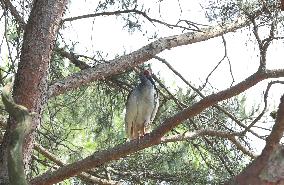
(240524) -- SEOUL, May 24, 2024 (Xinhua) -- A released crested ibis is pictured in Changnyeong, South Korea, May 20, 2024. The crested ibis, which used to be widely distributed in China, Japan, South Korea and other East Asian regions, has become an endangered bird species worldwide, rarely seen in South Korea since the 1980s. In 2008, the crested ibis couple "Yang Zhou" and "Long Ting" arrived and settled down at the Upo Crested Ibis Restoration Center in Changnyeong as a gift from China to South Korea. Another two male crested ibises "Jin Shui" and "Bai Shi" were sent to South Korea in 2013. Years of hard work has seen over 500 offspring of the four crested ibises given birth to in South Korea, of which more than 300 were successfully released into the wild. In 2021, two crested ibis chicks were bred in the wild in South Korea, which is the first time in more than 4 decades that the birth of wild crested ibis was observed in the country. Now a main habitat for crested ibis in South Korea, Changn

  •  
SOUTH KOREA-CHANGNYEOUNG COUNTY-CRESTED IBIS

SOUTH KOREA-CHANGNYEOUNG COUNTY-CRESTED IBIS

(240524) -- SEOUL, May 24, 2024 (Xinhua) -- This photo taken on May 20, 2024 shows a nursery room for crested ibis chicks at the Upo Crested Ibis Restoration Center in Changnyeong, South Korea. The crested ibis, which used to be widely distributed in China, Japan, South Korea and other East Asian regions, has become an endangered bird species worldwide, rarely seen in South Korea since the 1980s. In 2008, the crested ibis couple "Yang Zhou" and "Long Ting" arrived and settled down at the Upo Crested Ibis Restoration Center in Changnyeong as a gift from China to South Korea. Another two male crested ibises "Jin Shui" and "Bai Shi" were sent to South Korea in 2013. Years of hard work has seen over 500 offspring of the four crested ibises given birth to in South Korea, of which more than 300 were successfully released into the wild. In 2021, two crested ibis chicks were bred in the wild in South Korea, which is the first time in more than 4 decades that the birth of wild crested ibis was observed in the

  •  
SOUTH KOREA-CHANGNYEOUNG COUNTY-CRESTED IBIS

SOUTH KOREA-CHANGNYEOUNG COUNTY-CRESTED IBIS

(240524) -- SEOUL, May 24, 2024 (Xinhua) -- This photo taken on May 21, 2024 shows the Upo Crested Ibis Restoration Center in Changnyeong, South Korea. The crested ibis, which used to be widely distributed in China, Japan, South Korea and other East Asian regions, has become an endangered bird species worldwide, rarely seen in South Korea since the 1980s. In 2008, the crested ibis couple "Yang Zhou" and "Long Ting" arrived and settled down at the Upo Crested Ibis Restoration Center in Changnyeong as a gift from China to South Korea. Another two male crested ibises "Jin Shui" and "Bai Shi" were sent to South Korea in 2013. Years of hard work has seen over 500 offspring of the four crested ibises given birth to in South Korea, of which more than 300 were successfully released into the wild. In 2021, two crested ibis chicks were bred in the wild in South Korea, which is the first time in more than 4 decades that the birth of wild crested ibis was observed in the country. Now a main habitat for creste

  •  
SOUTH KOREA-CHANGNYEOUNG COUNTY-CRESTED IBIS

SOUTH KOREA-CHANGNYEOUNG COUNTY-CRESTED IBIS

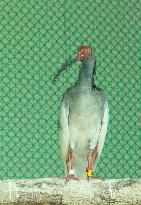
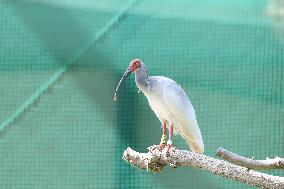
(240524) -- SEOUL, May 24, 2024 (Xinhua) -- Crested ibis "Long Ting" is pictured at the Upo Crested Ibis Restoration Center in Changnyeong, South Korea, May 20, 2024. The crested ibis, which used to be widely distributed in China, Japan, South Korea and other East Asian regions, has become an endangered bird species worldwide, rarely seen in South Korea since the 1980s. In 2008, the crested ibis couple "Yang Zhou" and "Long Ting" arrived and settled down at the Upo Crested Ibis Restoration Center in Changnyeong as a gift from China to South Korea. Another two male crested ibises "Jin Shui" and "Bai Shi" were sent to South Korea in 2013. Years of hard work has seen over 500 offspring of the four crested ibises given birth to in South Korea, of which more than 300 were successfully released into the wild. In 2021, two crested ibis chicks were bred in the wild in South Korea, which is the first time in more than 4 decades that the birth of wild crested ibis was observed in the country. Now a main hab

  •  
SOUTH KOREA-CHANGNYEOUNG COUNTY-CRESTED IBIS

SOUTH KOREA-CHANGNYEOUNG COUNTY-CRESTED IBIS

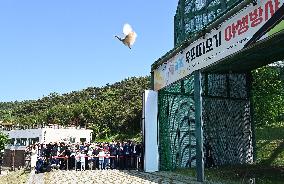
(240524) -- SEOUL, May 24, 2024 (Xinhua) -- A crested ibis is released into the wild in Changnyeong, South Korea, May 10, 2024. The crested ibis, which used to be widely distributed in China, Japan, South Korea and other East Asian regions, has become an endangered bird species worldwide, rarely seen in South Korea since the 1980s. In 2008, the crested ibis couple "Yang Zhou" and "Long Ting" arrived and settled down at the Upo Crested Ibis Restoration Center in Changnyeong as a gift from China to South Korea. Another two male crested ibises "Jin Shui" and "Bai Shi" were sent to South Korea in 2013. Years of hard work has seen over 500 offspring of the four crested ibises given birth to in South Korea, of which more than 300 were successfully released into the wild. In 2021, two crested ibis chicks were bred in the wild in South Korea, which is the first time in more than 4 decades that the birth of wild crested ibis was observed in the country. Now a main habitat for crested ibis in South Korea, C

  •  
SOUTH KOREA-CHANGNYEOUNG COUNTY-CRESTED IBIS

SOUTH KOREA-CHANGNYEOUNG COUNTY-CRESTED IBIS

(240524) -- SEOUL, May 24, 2024 (Xinhua) -- This undated file photo shows a released crested ibis near Changnyeong, South Korea. The crested ibis, which used to be widely distributed in China, Japan, South Korea and other East Asian regions, has become an endangered bird species worldwide, rarely seen in South Korea since the 1980s. In 2008, the crested ibis couple "Yang Zhou" and "Long Ting" arrived and settled down at the Upo Crested Ibis Restoration Center in Changnyeong as a gift from China to South Korea. Another two male crested ibises "Jin Shui" and "Bai Shi" were sent to South Korea in 2013. Years of hard work has seen over 500 offspring of the four crested ibises given birth to in South Korea, of which more than 300 were successfully released into the wild. In 2021, two crested ibis chicks were bred in the wild in South Korea, which is the first time in more than 4 decades that the birth of wild crested ibis was observed in the country. Now a main habitat for crested ibis in South Korea,

  •  
SOUTH KOREA-CHANGNYEOUNG COUNTY-CRESTED IBIS

SOUTH KOREA-CHANGNYEOUNG COUNTY-CRESTED IBIS

(240524) -- SEOUL, May 24, 2024 (Xinhua) -- A crested ibis is pictured at the Upo Crested Ibis Restoration Center in Changnyeong, South Korea, May 20, 2024. The crested ibis, which used to be widely distributed in China, Japan, South Korea and other East Asian regions, has become an endangered bird species worldwide, rarely seen in South Korea since the 1980s. In 2008, the crested ibis couple "Yang Zhou" and "Long Ting" arrived and settled down at the Upo Crested Ibis Restoration Center in Changnyeong as a gift from China to South Korea. Another two male crested ibises "Jin Shui" and "Bai Shi" were sent to South Korea in 2013. Years of hard work has seen over 500 offspring of the four crested ibises given birth to in South Korea, of which more than 300 were successfully released into the wild. In 2021, two crested ibis chicks were bred in the wild in South Korea, which is the first time in more than 4 decades that the birth of wild crested ibis was observed in the country. Now a main habitat for c

  •  
SOUTH KOREA-CHANGNYEOUNG COUNTY-CRESTED IBIS

SOUTH KOREA-CHANGNYEOUNG COUNTY-CRESTED IBIS

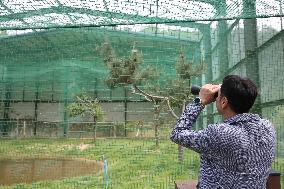
(240524) -- SEOUL, May 24, 2024 (Xinhua) -- Breeder Han Yeong-In observes crested ibises at the Upo Crested Ibis Restoration Center in Changnyeong, South Korea, May 21, 2024. The crested ibis, which used to be widely distributed in China, Japan, South Korea and other East Asian regions, has become an endangered bird species worldwide, rarely seen in South Korea since the 1980s. In 2008, the crested ibis couple "Yang Zhou" and "Long Ting" arrived and settled down at the Upo Crested Ibis Restoration Center in Changnyeong as a gift from China to South Korea. Another two male crested ibises "Jin Shui" and "Bai Shi" were sent to South Korea in 2013. Years of hard work has seen over 500 offspring of the four crested ibises given birth to in South Korea, of which more than 300 were successfully released into the wild. In 2021, two crested ibis chicks were bred in the wild in South Korea, which is the first time in more than 4 decades that the birth of wild crested ibis was observed in the country. Now a

  •  
SOUTH KOREA-CHANGNYEOUNG COUNTY-CRESTED IBIS

SOUTH KOREA-CHANGNYEOUNG COUNTY-CRESTED IBIS

(240524) -- SEOUL, May 24, 2024 (Xinhua) -- This photo taken on May 21, 2024 shows a training facility for crested ibis before their release at the Upo Crested Ibis Restoration Center in Changnyeong, South Korea. The crested ibis, which used to be widely distributed in China, Japan, South Korea and other East Asian regions, has become an endangered bird species worldwide, rarely seen in South Korea since the 1980s. In 2008, the crested ibis couple "Yang Zhou" and "Long Ting" arrived and settled down at the Upo Crested Ibis Restoration Center in Changnyeong as a gift from China to South Korea. Another two male crested ibises "Jin Shui" and "Bai Shi" were sent to South Korea in 2013. Years of hard work has seen over 500 offspring of the four crested ibises given birth to in South Korea, of which more than 300 were successfully released into the wild. In 2021, two crested ibis chicks were bred in the wild in South Korea, which is the first time in more than 4 decades that the birth of wild crested ibis w

  •  
SOUTH KOREA-CHANGNYEOUNG COUNTY-CRESTED IBIS

SOUTH KOREA-CHANGNYEOUNG COUNTY-CRESTED IBIS

(240524) -- SEOUL, May 24, 2024 (Xinhua) -- A staff member takes care of crested ibis chicks at the Upo Crested Ibis Restoration Center in Changnyeong, South Korea, May 20, 2024. The crested ibis, which used to be widely distributed in China, Japan, South Korea and other East Asian regions, has become an endangered bird species worldwide, rarely seen in South Korea since the 1980s. In 2008, the crested ibis couple "Yang Zhou" and "Long Ting" arrived and settled down at the Upo Crested Ibis Restoration Center in Changnyeong as a gift from China to South Korea. Another two male crested ibises "Jin Shui" and "Bai Shi" were sent to South Korea in 2013. Years of hard work has seen over 500 offspring of the four crested ibises given birth to in South Korea, of which more than 300 were successfully released into the wild. In 2021, two crested ibis chicks were bred in the wild in South Korea, which is the first time in more than 4 decades that the birth of wild crested ibis was observed in the country. No

  •  
SOUTH KOREA-CHANGNYEOUNG COUNTY-CRESTED IBIS

SOUTH KOREA-CHANGNYEOUNG COUNTY-CRESTED IBIS

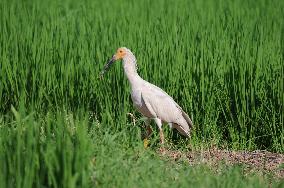
(240524) -- SEOUL, May 24, 2024 (Xinhua) -- A released crested ibis is pictured in Changnyeong, South Korea, May 20, 2024. The crested ibis, which used to be widely distributed in China, Japan, South Korea and other East Asian regions, has become an endangered bird species worldwide, rarely seen in South Korea since the 1980s. In 2008, the crested ibis couple "Yang Zhou" and "Long Ting" arrived and settled down at the Upo Crested Ibis Restoration Center in Changnyeong as a gift from China to South Korea. Another two male crested ibises "Jin Shui" and "Bai Shi" were sent to South Korea in 2013. Years of hard work has seen over 500 offspring of the four crested ibises given birth to in South Korea, of which more than 300 were successfully released into the wild. In 2021, two crested ibis chicks were bred in the wild in South Korea, which is the first time in more than 4 decades that the birth of wild crested ibis was observed in the country. Now a main habitat for crested ibis in South Korea, Changn

  • Main
  • Top
  • Editorial
  • Creative
  • About Us
  • About ILG
  • Terms of use
  • Company
  • BEHIND
  • Price List
  • Single Plan
  • Monthly Plan
  • Services
  • Shooting
  • Rights Clearance
  • Support
  • FAQ
  • How To Buy
  • Contact Us
  • Become a Partner

© KYODO NEWS IMAGES INC

All Rights Reserved.

  • Editorial
  • Olympics
  • News
  • Sports
  • Japan
  • Tech
  • Royal
  • Disaster
  • NorthKorea
  • Old Japan
  • SNS
  • Creative
  • Food
  • Japan
  • Landscape
  • Animal
  • Popular
  • #Ukraine
  • #China
  • #coronavirus
  • #N. Korea
  • #Thailand
  • #Russia
  • #Ukraine
  • #China
  • #coronavirus
  • #N. Korea
  • #Thailand
  • #Russia
  • Food
  • Japan
  • Landscape
  • Animal
  • Olympics
  • News
  • Sports
  • Japan
  • Tech
  • Royal
  • Disaster
  • NorthKorea
  • Old Japan
  • SNS